
Your cart
There are no more items in your cart
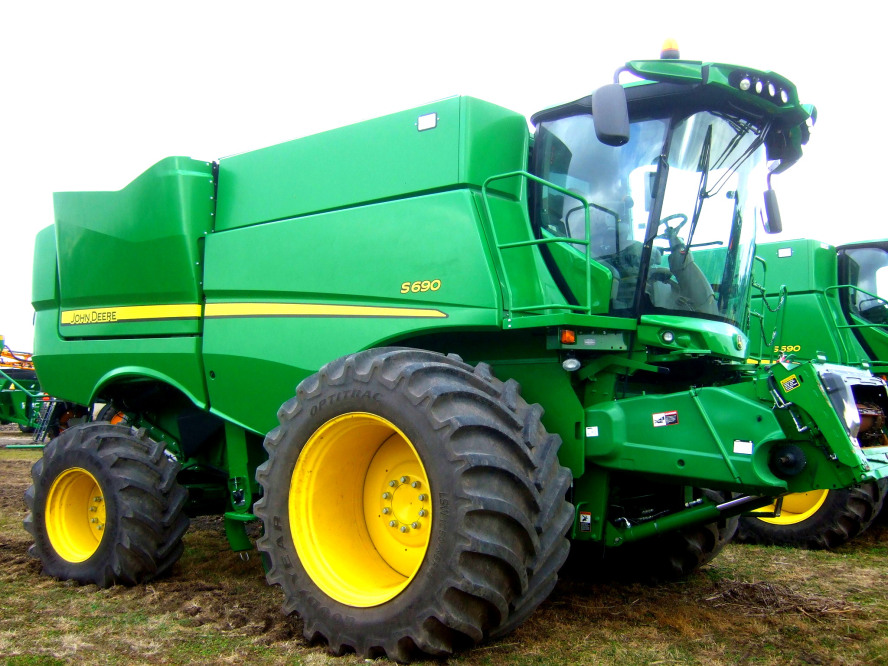
John Deere S690 Combine
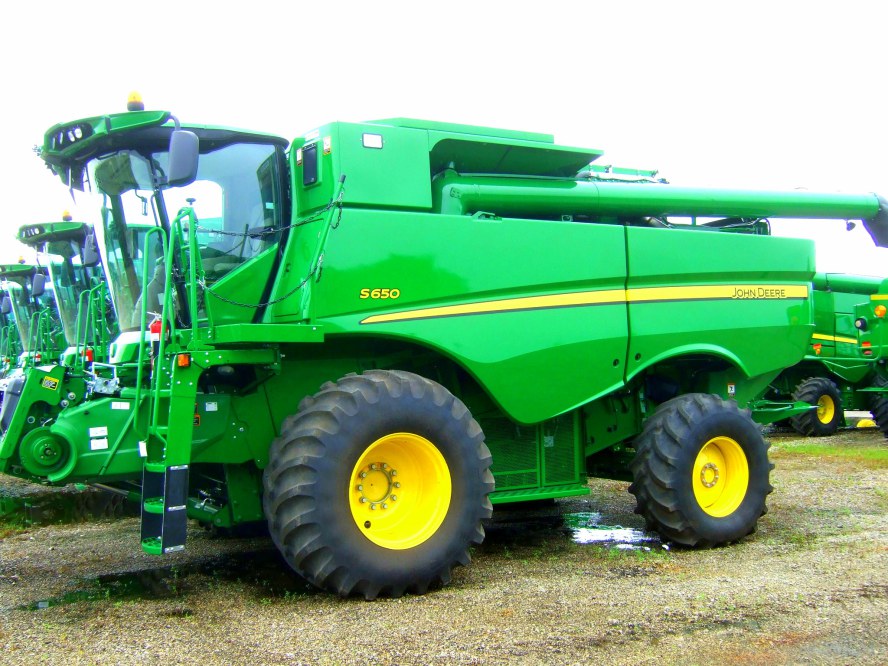
John Deere S650 Combine
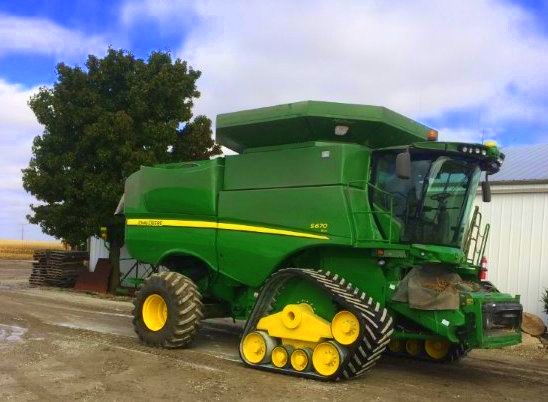
John Deere S670 on Tracks
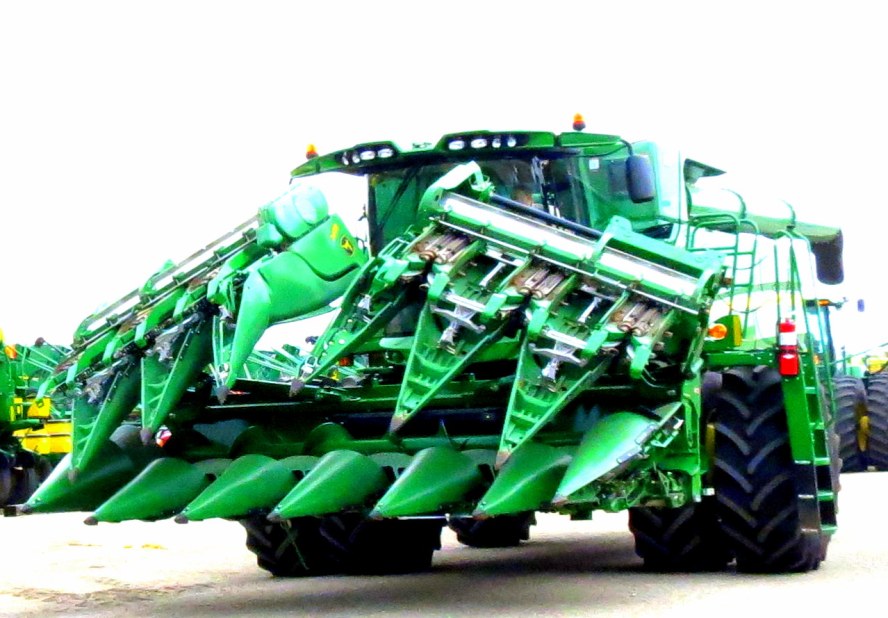
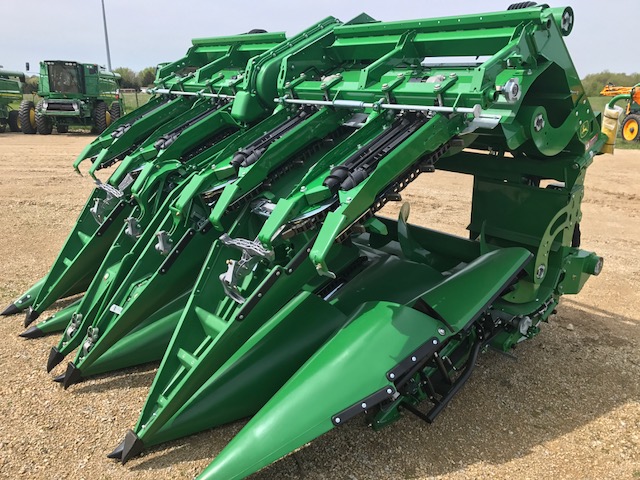
John Deere 612FC Folding Cornhead
Key features of the 11-model range available in the UK and Ireland include an integrated 66cm (26in) wide rubber track design for S-Series models only, suitable for road speeds up to 30kph, with full hydraulic suspension and an overall transport width of 3.42m; newly designed transmissions and Premium cab; a new cleaning shoe with an active returns system plus a new high performance Variable Stream Rotor on the expanded S-Series range of three models; a wider range of cutting platforms up to 10.7m (35ft), including the versatile PremiumFlow header; an enhanced residue management system; and a wider range of flotation tyre options.
The newly consolidated John Deere range for 2012 will consist of the W540, W550, W650 and W660 conventional five and six straw-walker combines; the restyled five- and six-walker T550, T560, T660 and T670 models, featuring the company’s established tangential tine separation technology; and the S670, S680 and S690 combines, which now provide even greater harvesting capacity in all crops and conditions.
All the combines are powered by Stage IIIB compliant 6.8-, 9.0- or 13.5- litre John Deere PowerTech PSX engines to meet emissions regulations. These high-pressure common rail (HPCR) engines are equipped with two in-series turbochargers for higher boost pressures, a four-valve cylinder head for enhanced airflow, electronic engine control and an exhaust gas recirculation (EGR) system.
John Deere’s diesel-only engine solution requires no urea, by combining a diesel oxidation catalyst (DOC) and a diesel particulate filter (DPF) to reduce harmful emissions while maintaining high levels of fuel efficiency. These engines are designed to make it easier to harvest up to the limit of the combine’s capacity, especially when unloading while harvesting.
There is a choice of two transmissions on S-Series models. The proven ProDrive transmission, standard on the S680 and S690, features smooth, automatic shifting between two speed ranges, and has an electrically activated diff lock. It offers speed selection for normal harvesting conditions or for faster field work and road transport, and allows individual speed adjustment via the hydrostatic control lever. The newly designed three-speed Push Button Shift Transmission (PBST) is standard on the smaller S670 model, and allows the operator to select the required gear by simply pressing one of three buttons on the armrest console. As with ProDrive, this transmission applies the parking brake automatically once the hydro lever is pulled into the neutral position.
PBST is also standard on the T-Series combines, with ProDrive available as an option on the top three models in this range, which also features improved serviceability, with easier access to the sides of the combine and the main drives. All four W-Series combines are equipped with a basic three-speed transmission as standard, with PBST optionally available.
The all-new Premium cab on the S & T-Series combines provides 30 per cent more space, lower noise levels and an almost uninterrupted view of the harvesting operation. The four-way adjustable air suspension seat is more comfortable and includes lumbar adjustment for greater back support, while the larger passenger seat can be easily converted into a field office with space for a laptop computer, if required.
The cab features the same basic, easy to use operational layout as John Deere’s new 8R Series tractors, with effortless control of the harvesting operation provided by the CommandTouch armrest console, GreenStar 3 CommandCenter display, digital corner post display and tiltable steering column. The optional GreenStar 2630 touch-screen display supports the full John Deere i-solutions package, including HarvestSmart automatic feedrate control, Harvest Monitor yield monitoring and AutoTrac automatic steering.
An optional video camera can be installed to monitor the rear of the combine, the grain tank and the unloading auger for all-round visibility and control from the single GreenStar 3 display. Additional cab features include an efficient air conditioning system, sunshades, a refrigerator and a premium radio package.
A new button on the master control lever enables activation of AutoTrac for increased field efficiency, while the corner post display includes a new power meter. This displays the percentage of power being used, which allows the operator to maximise the machine’s overall harvesting capacity when required.
The new Variable Stream Rotor on S-Series combines provides higher separator capacity with a smoother, more uniform crop flow, better straw quality and lower fuel consumption. It combines the proven single-tine separation system with a new, stronger rotor and new top covers with adjustable vanes, all specifically designed for maximum performance especially in high-moisture, high-yielding crops and green harvest conditions.
The new S-Series combine’s cleaning shoe has a large one-piece chaffer and a 19 per cent larger sieve, which makes it much easier to set the combine for high performance harvesting, and the sieve settings can be adjusted electronically from the cab. The active returns system is also very easy to adjust, and by handling returns that would normally go back to the separator, and thus lower separator performance, it increases the total output of the combine. This system uses less aggressive concave settings than those in the separator, and handles sensitive crops more gently, to maintain high grain quality.
The S-Series combines’ residue management system features a new finecut straw chopper with 44 winged knives, to provide even spreading at widths of up to 9m, and can be set and adjusted on the move from the cab display. An optional PowerCast spreader is available to match the widest 10.7m cutting platform.
With the Premium version, the operator can either drop straw and spread chaff, or chop straw and spread all the material during harvesting, simply by switching from chop to drop on the CommandCenter display. This straw chopper has 100 grooved knives in four rows, working against 57 stationary knives to achieve the finest possible cut.
Straw and chaff can also be separated at the rear of the combine by dropping the straw in a windrow, while chaff is routed through the chopper and distributed over the full header width by the adjustable electronic vane tailboard.
The optional John Deere HillMaster self-levelling system is available on all models, and compensates for slopes of up to 15 per cent by levelling the entire combine body automatically on the move. Combined with the SlopeMaster sidehill kit, this provides full harvesting performance on slopes of up to 22 per cent. With HillMaster, John Deere offers the largest full body self-levelling straw walker combine in the industry.
John Deere’s web-based JDLink telematics solution will also be supplied free, as standard, with all new W, T and S-Series combine models for the first year of ownership. This system offers three specification levels, allowing it to be tailored to individual business needs. JDLink provides data on machine location, fuel consumption and harvest performance, as well as machine hour and location tracking, geofencing to protect a machine from misuse, and maintenance planning. This enables fleet owners and managers to determine, for example, if operators need more training.
Model lineup included the S550, S660, S670, S680, & S690. It featured a larger cab with much-improved visibility over the 70 Series. This really saved a lot of “bow necking;” looking around the corner post to see the ends of your headers. It had (finally) a touchscreen command center display. There were a lot of 70 series command centers with fingerprints on them because operators were used to the touch screen in their tractors and tried in vain to run the 70 Series combine command center the same way.
The new refrigerator was a big hit because it reduced the need for a cooler to get you through the long days. The factory cab-cam harness made it easier to install cameras on the machine to reduce stress when on the road or when backing up. The S-Series also introduced a larger and more efficient cleaning shoe to help keep more crop in the machine. With this added productivity, the S680 and S690 received a larger standard grain tank and an increased unloading auger capacity of 3.8 bu/sec vs. the 3.3bu/sec on the 70 series.
The S680 and S690 were also given an active tailings system to help better deal with the added capacity of the machine and reduce losses by not recirculating crop back through the rotor. One of my favorite changes was the ease of changing the chopper speed. Gone were the days of swapping belts to switch from corn to beans. Another change vs. the 70 Series was the removal of the park brake pedal and shift lever for the 3-speed transmission. All of this was moved to the armrest as a park brake button and a 1-2-3 gear selection. Also gone was the big silver colored boat anchor in the grain tank better known as the moisture sensor. Replacing it was the new auger style mounted on the side of the clean grain elevator. This new design was much more reliable than its predecessor. Another new option was the power folding grain tank extension. This allowed customers to fold it up or down from the cab to avoid low hanging power lines or shorter shed doors. John Deere entered the class 9 market in 2012 with the model S690 with 543 hp at rated speed for handling larger heads, larger acres, and heavier crop conditions.
Other additions in 2012 were new flex draper heads in 35’ and 40’ configurations, the 635FD and 640FD, and the 16-row corn head, 616C was introduced in 2012 as well.
No changes were made to the model numbers for 2013, but there were some changes to the fleet nonetheless. The rotor received a thicker skin to help protect it from damage from ingestion of foreign material. A mid-year option addition permitted the chaffer to have a manually adjusted rear section. This allowed for the independent adjustment of the rear of the chaffer to a tighter setting to help reduce the amount of tailings volume.
This year saw some major changes to the S series. First, the S550 was dropped from the lineup and the S650 added.
The S650 had the same larger rotor size of its big brothers, increased hp over the S550, and a larger cleaning shoe. Speaking of hp, the S660 and S670 also received increased muscle for 2014. Diesel Exhaust Fluid (DEF) was now required to meet the EPA smog standards and complete the long emissions journey to Final Tier 4. Operators would notice a big reduction of cab noise in 2014 due to increased cab insulation, better door sealing, and laminated front glass. A newly redesigned 36” track option was added to the lineup for help with those high floatation situations and deal with other challenging field conditions.
John Deere also introduced Interactive Combine Adjust in 2014. This feature found in the command center helped operators fine tune their machines to get maximum performance and productivity. John Deere entered the 30’ flex draper market in 2014 with the release of the 630FD header.
The 2015 model year machines received a really nice update with the hydraulic fore-aft tilt feeder house. This allowed for easier header connection and much-improved performance in the field. When field conditions got tough, you could tilt the head back and forth to find the optimum cutting angle to improve header control performance. We prepared this video in 2015 to better explain this feature.
Some structural strength was also added to the feeder house as well as moving the now smaller drum forward for improved feeding. With more crop coming into the machine, Deere released the Active Concave Isolation option and hydraulically suspended the concave to provide a more robust concave gap and more consistent performance when dealing with slugs. Deere entered the 45’ flex draper market in ’15 as well for those large acre customers who needed the greater productivity of a larger header. To accommodate the larger head, Deere released the 28.5’ unloading auger option. To improve draper performance in field conditions that load one side of the header and not the other, Deere introduced the side belt speed reduction feature which would slow down one side of the header, but not the other, to prevent the belts from plugging.
John Deere entered the folding corn head market in 2016. This allowed operators with 12-row heads to move from field to field without requiring a head cart or a vehicle and person to pull the head cart from field to field, saving valuable time and money.
The combines also received a 12% larger sieve to help save more grain from exiting the combine and to help clean up the grain tank. Active Terrain Adjust option arrived which automatically adjusted the cleaning shoe settings and the fan speed based on the slope when going up and down a hill without any input from the operator. An onboard air compressor was added to the options list to allow operators to blow off debris that had accumulated on the machine or service low air pressure in tires. Lastly, the draper received a wider feed section in the center as well as a much larger and stronger reel finger.
Models built for this fall received some fine tuning features, but no real major changes. A factory installed camera chassis harness was available for the first time to ease camera installation. An available foot rest option for the steering column was released and can be retrofitted to older machines. Eight-row corn head owners can now purchase a folding corn head for really tight transport opportunities.
Finally, a high moisture corn enhancement was added to improve grain quality and cleanliness with combines equipped with the deep tooth cleaning shoe.
Thanks for reading about the history of the S-Series combine. If you are looking to upgrade from a previous series machine, hopefully this information will help you understand the changes made each year and help you make an informed decision for your farm and your budget.
| MODEL |
S550 |
S660 |
S670 |
S680 |
S690 |
|
ENGINE Type |
John Deere 6-cyl. 6.8 L |
John Deere 6 cyl. 9.0 L |
John Deere 6-cyl. 9.0 L |
John Deere 6-cyl 13.5 L |
John Deere 6-cyl 13.5 L |
|
Displacement (L/cu. in.) |
6.8/414 |
9.0/548 |
9.0/548 |
13.5/824 |
13.5/824 |
|
Fuel Capacity (L/gal.) |
757/200 |
950/250 |
950/250 |
1250/330 |
1250/330 |
|
Cooling |
Air-to-Air Aftercooler |
Air-to-Air Aftercooler |
Air-to-Air Aftercooler |
Air-to-Air Aftercooler |
Air-to-Air Aftercooler |
|
Rated Speed (rpm) |
2400 |
2200 |
2200 |
2100 |
2100 |
|
Rated Power (kW/hp) |
202/271 |
239/320 |
278/373 |
353/473 |
405/543 |
|
Power Boost @ Rated Speed (kW/hp) - IT4 |
N/A |
25/34 |
25/34 |
37/50 |
37/50 |
|
Rated Power @ -100 rpm Rated Speed (kW/hp) -IT4 |
N/A |
256/343 |
297/398 |
378/507 |
433/580 |
|
Peak Power @ -200 rpm Rated Speed (kW/hp) - IT4 |
N/A |
272/365 |
317/425 |
402/540 |
460/617 |
|
Power Boost @ Rated Speed (kW/hp) ---NON-IT4 |
22/30 |
25/34 |
25/34 |
37/50 |
23/31 |
|
Rated Power @ -100 rpm Rated Speed (kW/hp) ---NON-IT4 |
216/290 |
256/343 |
297/398 |
378/507 |
433/580 |
|
Peak Power @ -200 rpm Rated Speed (kW/hp) ---NON-IT4 |
224/300 |
272/365 |
317/425 |
402/540 |
458/614 |
|
FEEDING |
|
|
|
|
|
|
Drive Type |
Fixed or Variable |
Fixed or Variable |
Fixed or Variable or MultiSpeed |
Fixed or MultiSpeed |
Fixed or MultiSpeed |
|
Conveyor Chain Slat Type |
T-bar |
Cast Iron |
Cast Iron |
Cast Iron |
Cast Iron |
|
Width (mm/in.) |
1120/44 |
1397/55 |
1397/55 |
1397/55 |
1397/55 |
|
Length (mm/in.) |
1727/68 |
1727/68 |
1727/68 |
1727/68 |
1727/68 |
|
“Feed Accelerator, Stone Trap (FAST)” |
Standard |
Standard |
Standard |
Standard |
Standard |
|
Reverser |
Standard |
Standard |
Standard |
Standard |
Standard |
|
THRESHING/SEPARATING |
|
|
|
|
|
|
Separator Type |
Rotary |
Rotary |
Rotary |
Rotary |
Rotary |
|
Rotor Length (mm/in.) |
3124/123 |
3124/123 |
3124/123 |
3124/123 |
3124/123 |
|
Rotor Diameter (mm/in.) |
610/24 |
762/30 |
762/30 |
762/30 |
762/30 |
|
Rotor Speed Range (rpm) |
220-1210 |
210-1000 |
210-1000 |
210-1000 |
210-1000 |
|
Concave Area (m2/in.22) |
0.9/1395 |
1.1/1705 |
1.1/1705 |
1.1/1705 |
1.1/1705 |
|
Separating Area (m2/in.2) |
1.3/2016 |
1.54/2390 |
1.54/2390 |
1.54/2390 |
1.54/2390 |
|
Discharge Grate Area (m2/in.2) |
0.3/464 |
0.36/555 |
0.36/555 |
0.45/698 |
0.45/698 |
|
CLEANING |
|
|
|
|
|
|
Front Chaffer (m2/in.2) |
0.8/1200 |
0.5/801 |
0.5/801 |
0.5/801 |
0.5/801 |
|
Front Chaffer Extension (m2/in.2) |
N/A |
N/A |
N/A |
.7/1128 |
.7/1128 |
|
Chaffer (m2/in.2) |
1.5/2358 |
2.5/3824 |
2.5/3824 |
2.5/3824 |
2.5/3824 |
|
Sieve Area (m2/in.2) |
1.3/2025 |
1.9/2964 |
1.9/2964 |
1.9/2964 |
1.9/2964 |
|
Total Cleaning Area (m2/in.2) |
3.6/5583 |
4.9/7589 |
4.9/7589 |
5.6/8711 |
5.6/8711 |
|
Cleaning Fan Speed (rpm) |
620-1200 |
620-1350 |
620-1350 |
620-1350 |
620-1350 |
|
GRAIN HANDLING |
|
|
|
|
|
|
Grain Tank Size (L/bu.) |
8900/250 |
10600/300 |
10600/300 |
14100/400 |
14100/400 |
|
Unloading Auger Length (m/ft.) |
4.7/15.5, 5.6/18.5, or 6.5/21.5 |
6.5/21.5, 6.9/22.5, or 7.9/26 |
6.9/22.5 or 7.9/26 |
6.9/22.5 or 7.9/26 |
6.9/22.5 or 7.9/26 |
|
Unloading Rate (L/sec. / bu/sec.) |
77 / 2.2 |
77/2.2 or 120/3.3 |
120/3.3 |
135/3.8 |
135/3.8 |